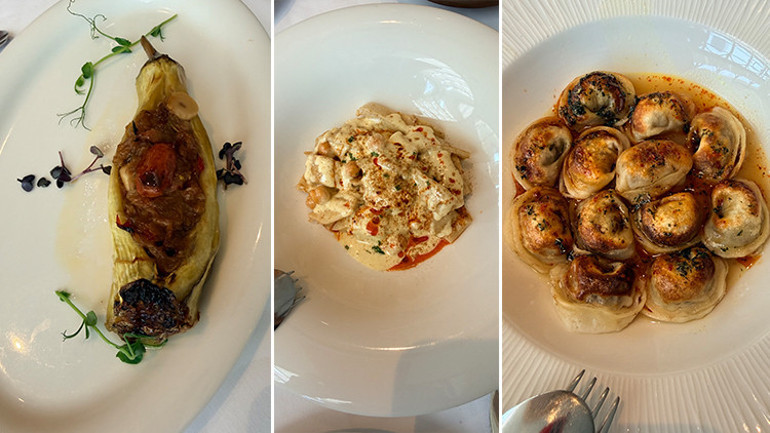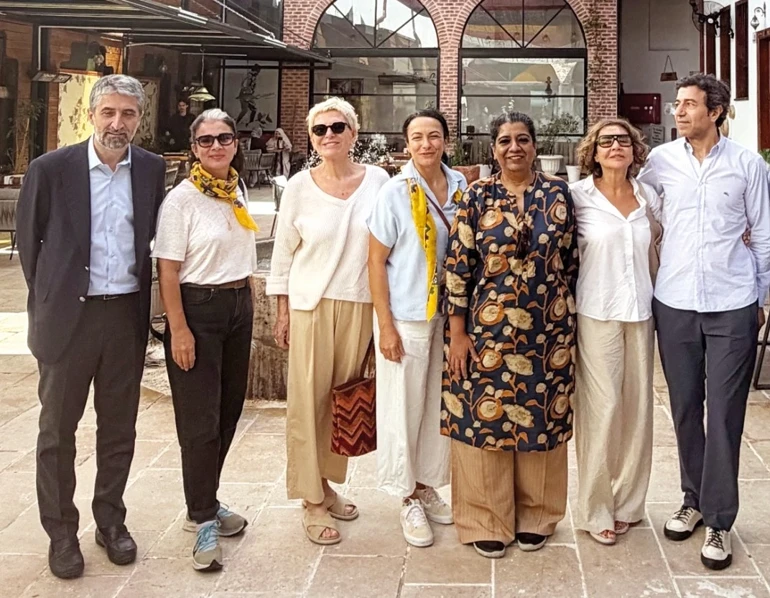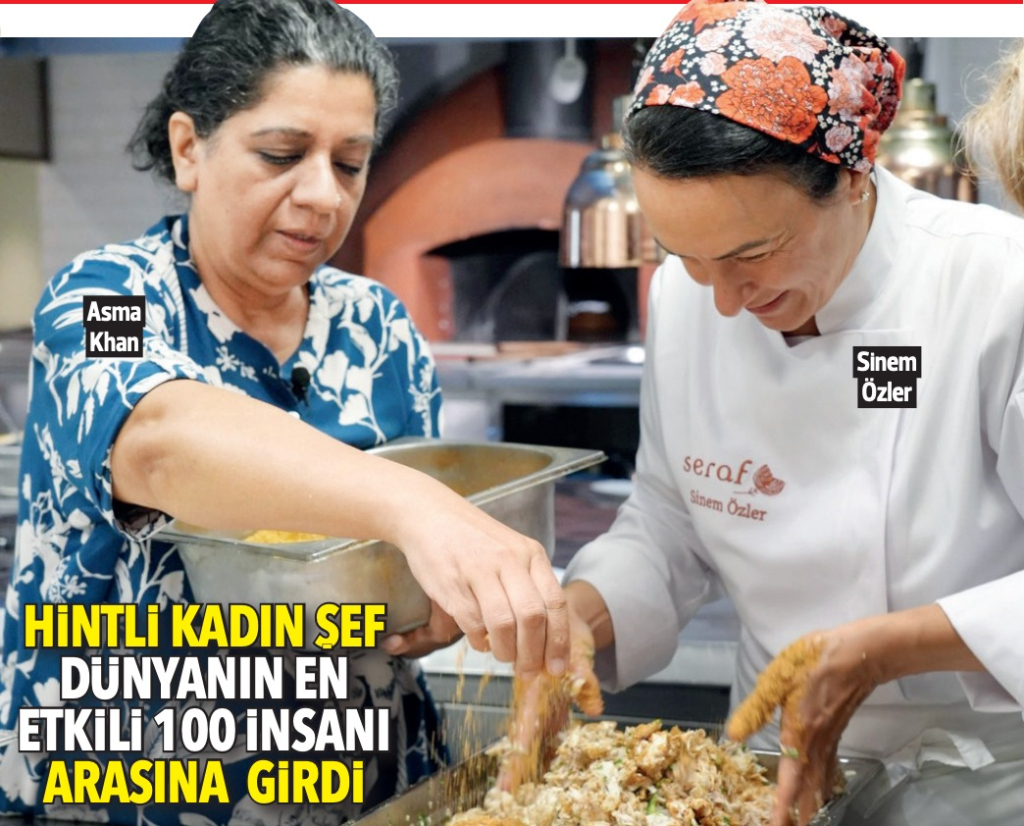
GAZETE OKSİJEN — O2 — Asma Khan, founder of London’s Darjeeling Express and named by TIME among the 100 most influential people of 2024, came to Türkiye at the invitation of Chef Sinem Özler. After preparing a special dinner with Özler at Seraf Vadi in Istanbul, her programme also included a visit to Tokat, organised by Ozan Diren, chairman of DİMES, whose roots reach back to the region.
One of the most striking things Khan was shown was the production culture built around the Narince grape. In the region the vine is not treated merely as a fruit crop: its leaves are picked and brined for sarma, its must is turned into pekmez and local products such as şıra tatlı tarhana. A single vineyard becomes the raw material for a wide range of products. What today’s gastronomy calls circular production, local sourcing and whole-crop use has long-standing equivalents in Anatolia’s traditional production culture.
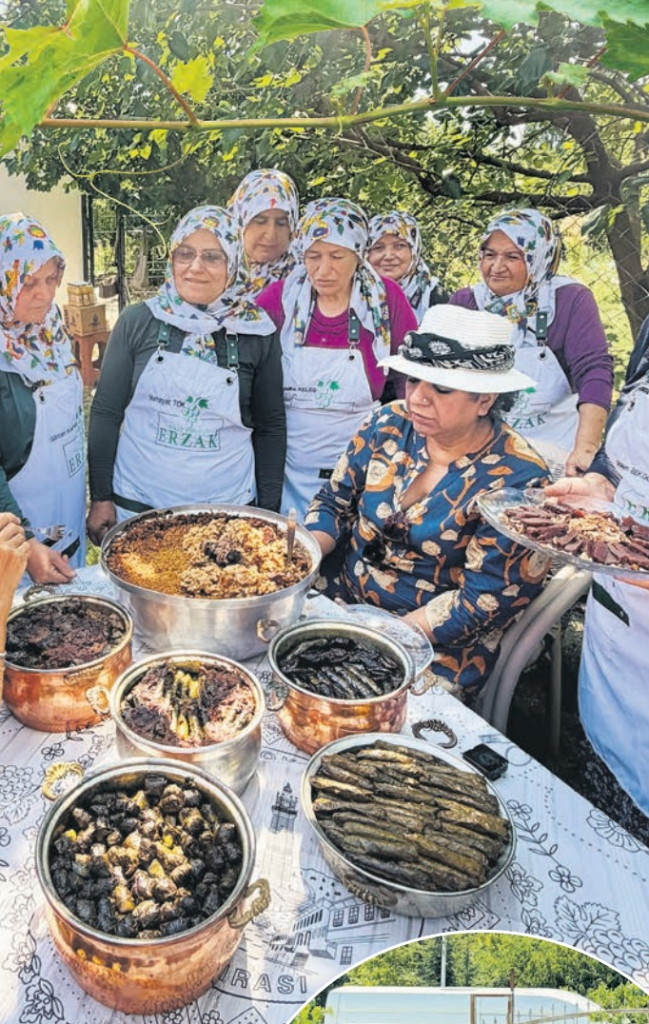
At the Erzak Women’s Cooperative, Khan picked leaves from the Narince vines alongside local women and then made sarma with cooperative members. The varieties prepared included broad bean sarma, plain sarma with plums, meat sarma and sarma in olive oil; the way a single leaf turned into entirely different dishes through different ingredients and techniques particularly caught Khan’s attention.
The other stop was the Kazova Vasfi Diren farm, where fruit growing, viticulture and livestock are run together. What stands out is the relationship built with surrounding producers: saplings are supplied to farmers, production support is given and a market is created for what they grow. Sustainability, the piece notes, is not only about protecting soil and water but about a producer being able to make a living and wanting to farm again next year.
For Seraf, the visit reflects a kitchen whose relationship with Anatolia does not stop at recipes. Local products are not treated as a sourcing preference; the geography a product comes from, the way it is made and the human knowledge behind it are all considered part of the kitchen.